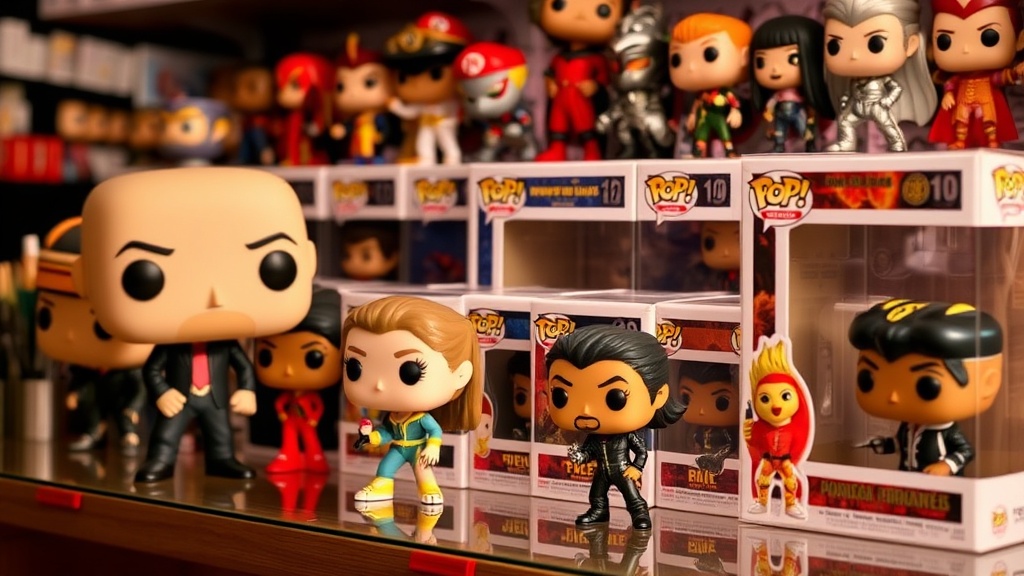
How to Display and Protect Your Funko Pop Collection Like a Pro

Displaying a Funko Pop collection isn't just about stacking boxes on a shelf. This guide covers everything from dust protection and UV shielding to stacking strategies and lighting choices that won't fade the figures. Whether you've got twenty Pops or two thousand, proper display methods protect the value of the investment while making the collection something worth showing off.
What Are the Best Funko Pop Display Cases?
The best display cases balance visibility with protection. Soft vinyl Pops scratch easily. Paint flaws show up under harsh lighting. Dust settles into every crevice of a bobble-head's spring mechanism. A good case solves all three problems.
PopShield Protectors remain the gold standard among serious collectors. These 0.5mm thick, acid-free PET plastic cases feature a locking tab design that keeps the figure secure during moves. The crystal-clear material won't yellow over time — something that plagued older generation soft protectors.
For in-box collectors (often called "MIB" or Mint In Box), Vaulted Vinyl makes stackable hard stacks with reinforced corners. At roughly $3 per case, they're pricier than basic soft protectors. The trade-off? Drop protection. A Pop in a hard stack survives a four-foot fall onto carpet. The same figure in a thin soft protector? The box corners dent instantly.
Out-of-box collectors have fewer options, but acrylic risers from standard craft retailers work surprisingly well. The trick is finding ones tall enough — standard 3.75-inch Pops need at least 4 inches of clearance to avoid grazing the shelf above.
Soft vs. Hard Protectors: A Quick Comparison
| Feature | Soft Protector (PopShield Basic) | Hard Stack (Vaulted Vinyl) |
|---|---|---|
| Price per unit | $0.50–$0.80 | $2.50–$3.50 |
| Material thickness | 0.35mm PET | 0.50mm acid-free plastic |
| Stacking weight limit | 15–20 Pops high | 40+ Pops high |
| Drop protection | Minimal | High (survives 4-foot falls) |
| Best for | Bulk storage, short-term protection | Grail pieces, long-term display |
Worth noting: humidity matters more than most collectors realize. In damp climates (looking at you, Vancouver and Halifax), hard stacks with sealed edges prevent the cardboard backing from absorbing moisture. Once a Pop box starts warping, the value drops 30–50% — even if the figure inside stays pristine.
How Do You Protect Funko Pops from Sunlight Damage?
Direct sunlight destroys Pops in about six months. The vinyl material doesn't just fade — it discolors unpredictably. A bright red Iron Man becomes salmon pink. Deep black Batman figures turn ashy gray. The damage is irreversible.
UV-protective acrylic cases exist, but they're expensive (around $8–$12 per case). For most collectors, strategic placement works better. North-facing windows are safest in the Northern Hemisphere. South-facing rooms need blackout curtains during peak hours — that 2 PM to 5 PM window when UV index spikes.
LED strip lighting has become the go-to for display illumination. Phillips Hue Play bars and Govee LED strips run cool and emit zero UV. The warm white setting (2700K) shows off paint details without that harsh "department store" glare.
Here's the thing about glass cabinets: they amplify UV damage. Sunlight passes through, bounces off the back wall, and hits the Pops from multiple angles. IKEA's DETOLF cases — wildly popular among collectors — need aftermarket UV film applied to the glass panels. 3M's Prestige series window film blocks 99.9% of UV rays and costs roughly $30 to cover a standard DETOLF.
For collectors displaying near windows without film protection, rotate the figures monthly. The side facing away from the window will fade slower — not ideal, but it distributes the damage evenly across the collection.
What's the Best Way to Stack Funko Pop Boxes?
Vertical stacking preserves box condition best. Horizontal stacking puts pressure on the weakest structural point — the top flap seam. Given enough weight, that seam splits. Vertical boxes distribute load across the entire side panel.
That said, vertical stacking requires support. A single vertical stack of 30 Pops will lean. The lean accelerates. Eventually, the stack topples. Bookends help. So do modular cube shelves from ClosetMaid or IKEA KALLAX units — the 13-inch cube depth fits exactly six standard Pops deep (each box is roughly 6.25" x 4.5" x 3.5").
Weight limits matter more than you'd think. A standard Billy bookcase shelf holds about 66 pounds. That's roughly 200 Pops in soft protectors. The catch? Most collectors mix Pops with other collectibles. A single 6-inch Pop (like the 10-inch scaled figures) weighs as much as four standard Pops. Two 10-inch figures plus a regular collection quickly approaches shelf limits.
The Ottawa humidity swings — bone dry winters, sticky summers — cause cardboard expansion and contraction. Stacked boxes bind together in high humidity, then separate abruptly when the air dries out. This cycle tears box corners. Silica gel packets tucked behind display rows stabilize moisture levels. Replace them every six months — they saturate faster than the packaging suggests.
Stacking Strategies by Collection Size
- Under 50 Pops: Vertical stacks on existing bookshelves work fine. Use bookends every 10–12 boxes.
- 50–200 Pops: IKEA KALLAX or Target's Threshold cube organizers provide modular growth. Label each cube by franchise or wave.
- 200–500 Pops: Dedicated wire shelving units (Metro, Thunder Group) handle weight better than particle board. Add laminate shelves to prevent wire imprinting on box bottoms.
- 500+ Pops: Custom built-ins or specialized collector cabinets become necessary. Basement storage with dehumidifiers protects bulk inventory while displaying only grails upstairs.
How Do You Dust Funko Pop Figures Without Damaging Them?
Dust isn't just cosmetic. Over time, it bonds with vinyl — especially on matte-finish figures. The cleaning process then removes paint along with the dust. Prevention beats restoration every time.
Compressed air works for loose figures. Hold the can upright, short bursts only. Tilting the can releases propellant that leaves a filmy residue. For in-box figures, a soft makeup brush (synthetic bristles, 1-inch width) reaches between the plastic window and cardboard without scratching.
Microfiber cloths seem safe. They're not. The weave catches on raised details — antennae, weapons, tiny hats. A caught fiber pulls the figure off the shelf. Use lens cleaning cloths instead. The smoother texture glides over details.
The real pro move? Enclosed display. Detolf cases with doors. Acrylic risers inside glass cabinets. Even plastic storage totes with clear fronts (really — some collectors use The Container Store's drop-front shoe boxes) eliminate dust exposure entirely. A collection in enclosed storage needs cleaning once per year. Open shelving? Monthly dusting minimum.
Should You Display Funko Pops In Box or Out of Box?
This debate splits the community. Neither choice is wrong — but the decision affects long-term value and display options dramatically.
In-box collectors preserve resale value. A vaulted Pop (discontinued by Funko) in pristine box condition sells for 5–10x retail. The same figure loose? Maybe 2x retail, often less. For investment-minded collectors, boxes stay sealed.
Out-of-box display looks better. Full stop. You see the sculpt details. The paint applications catch light properly. Bobble-heads actually bobble. Boxed Pops become colorful rectangles — identifiable, but flat.
Some collectors split the difference. Grails stay boxed. Common figures come out. The "one to open, one to keep" approach works for dedicated collectors but requires storage space for duplicates. The Ottawa collector community (active on Discord and at Toys on Fire meetups) leans toward OOB display — less concern about resale, more focus on the visual impact of a full room installation.
Worth noting: Funko has started using "windowless" boxes on newer releases. The plastic window is gone, replaced by a cardboard cutout. These boxes must be opened to see the figure clearly — a move that nudges collectors toward OOB display whether they planned it or not.
Final Thoughts on Building a Display That Lasts
Start with protection, then build beauty. A collection displayed without UV shields, humidity control, or dust management deteriorates silently. The decline happens over years — long enough that most collectors don't notice until they compare a five-year-old display photo to the current state.
The best collections aren't the biggest. They're the ones still in pristine condition a decade later. That takes planning. It takes spending money on cases and shelving before the collection outgrows its space. It means accepting that some figures stay in storage while others take the spotlight.
Collecting is personal. Display it that way — but protect it like an investment. The Pops will outlast the enthusiasm if they're stored right. And when that vaulted figure suddenly spikes in value, you'll have options. Keep it. Sell it. Trade up. That's the freedom proper protection buys.