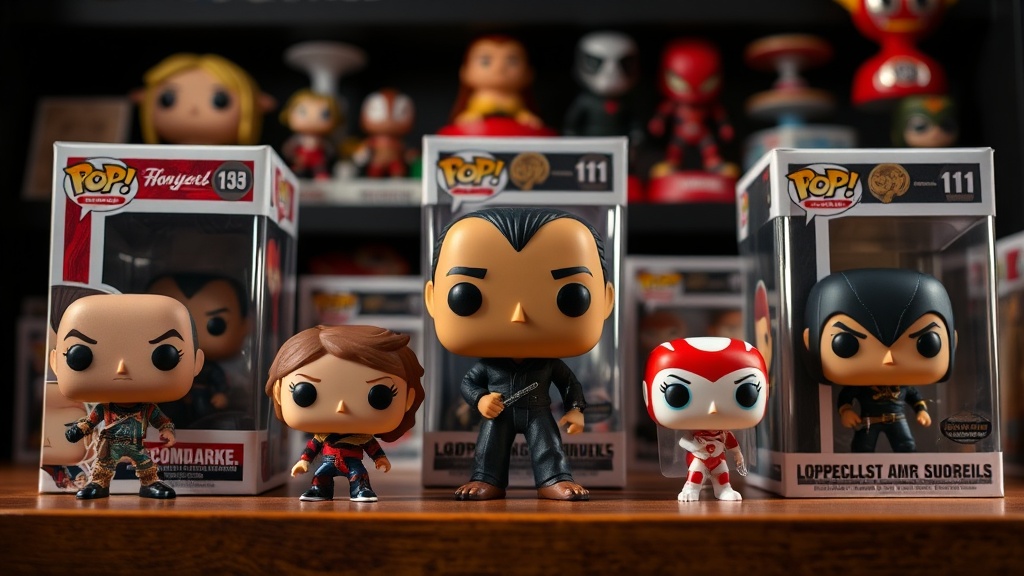
How to Protect Your Funko Pop Collection: Display & Storage Guide

Every Funko Pop collector faces the same challenge eventually — keeping hundreds (sometimes thousands) of vinyl figures in pristine condition while still enjoying them. This guide covers dust protection, UV damage prevention, stacking strategies, and long-term storage solutions that actually work in real homes. Whether you're managing a modest shelf display or a room-filling collection, these practical steps will keep pops looking factory-fresh for years.
What's the Best Way to Display Funko Pops Without Damaging Them?
The safest display method combines stable shelving, individual protection, and strategic positioning away from environmental hazards. Most collectors underestimate how quickly sunlight, dust, and accidental knocks can degrade both the figure and its packaging.
Start with the shelving itself. IKEA's KALLAX units remain the gold standard for Pop displays — affordable, modular, and perfectly sized for standard boxes. The 13x13" cubes accommodate six standard Pops comfortably, or four if you're using 0.5mm soft protectors. For larger collections, consider the BILLY bookcase system with adjustable shelves to accommodate 6-inch figures and ride vehicles.
Stacking Pops in their boxes requires care. Never stack more than three high without vertical support — the bottom box will eventually buckle under the weight. Some collectors use acrylic risers (available from Funko or third-party sellers like 7 Bucks a Pop) to create tiered displays that show off every figure while maintaining box integrity.
"The box is half the value — protect it like the figure itself." — Jin Côté, funkopop.blog
Protector Types and When to Use Them
Not every Pop needs a $15 hard stack. Here's how to choose:
| Protector Type | Best For | Cost (per unit) | Key Brands |
|---|---|---|---|
| Soft 0.5mm PP | Common Pops, temporary storage | $0.50–$0.80 | 7 Bucks a Pop, RetroProtection |
| Thick 0.7mm PET | Mid-tier exclusives, con pops | $1.20–$1.80 | PopShield, Vaulted Vinyl |
| Hard Stacks | Grails, signed Pops, high-value pieces | $8–$15 | Pop Stacks, EvoShield |
| Magnetic One-Touch | Ultimate protection for $100+ pieces | $12–$20 | 7 Bucks a Pop (premium line) |
Soft protectors work fine for most collections — they're cheap enough to buy in bulk and provide adequate dust protection. The catch? They won't prevent crushing if something heavy falls on your shelf. For Pops valued over $50, hard stacks become worthwhile insurance.
How Do You Prevent Sunlight and UV Damage on Funko Pops?
Direct sunlight causes irreversible fading within weeks — reds turn pink, blacks gray out, and white boxes yellow. UV damage accumulates even through windows, so proximity to any natural light source puts your collection at risk.
The solution isn't just "keep them away from windows." Many collectors display in basements, interior rooms, or use blackout curtains during peak sunlight hours. If you must place Pops near windows, apply 3M UV-blocking window film — it blocks 99% of harmful rays while maintaining visibility.
LED lighting presents a safer alternative for illuminating displays. Strip lights from Philips Hue or Govee can be mounted inside KALLAX cubes or along shelf edges without generating the heat that damages vinyl. Avoid halogen or incandescent bulbs positioned close to Pops — the heat causes boxes to bow and plastic to soften over time.
Worth noting: some "UV-protective" display cases sold on Amazon are actually just tinted acrylic with minimal protection. Look for cases specifically rated for UV400 blocking or higher. Michaels occasionally stocks baseball bat display cases (designed for single Pops) with genuine UV filtering at reasonable prices.
Managing Dust Without Constant Cleaning
Dust accumulation isn't just cosmetic — it seeps into creases, discolors white boxes, and can actually bond with vinyl over years. The standard approach (wiping each Pop weekly) becomes impractical past fifty figures.
Closed display cases solve this permanently. IKEA's DETOLF glass cabinet fits roughly 100 standard Pops with soft protectors and looks sharp in any room. For budget-conscious collectors, clear plastic storage bins with snap lids (Sterilite, 106-quart) protect stacks of Pops while remaining stackable and portable.
If you prefer open shelving, keep a handheld vacuum with brush attachment nearby. Five minutes weekly prevents dust buildup that would otherwise require individual wiping. Some collectors use compressed air (the kind sold for electronics) for detailed cleaning — just hold the can upright to avoid spraying moisture.
What Temperature and Humidity Should Funko Pops Be Stored At?
Ideal storage conditions mirror what you'd want for books or photographs — stable temperatures between 60–75°F (15–24°C) and humidity between 40–50%. Extreme heat warps vinyl; extreme cold makes it brittle. High humidity promotes mold on cardboard; low humidity causes boxes to dry out and split at seams.
Basements and attics are problematic for opposite reasons. Basements tend toward dampness, especially in older homes — a dehumidifier becomes non-negotiable if that's your storage location. Home Depot stocks affordable options from hOmeLabs that maintain consistent humidity levels in collection rooms.
Attics suffer temperature swings — freezing winters, baking summers. Vinyl softens around 140°F, which unventilated attics can easily reach. If attic storage is unavoidable, use insulated bins and check figures seasonally.
Here's the thing about "climate control" — most homes maintain adequate conditions naturally. Unless you're storing Pops in garages, sheds, or unconditioned spaces, expensive monitoring equipment probably isn't necessary. A simple AcuRite thermometer/hygrometer ($15) provides sufficient peace of mind.
Long-Term Storage Strategies
Collectors sometimes need to box up parts of their collection — moving, downsizing, or simply rotating displays. Proper packing prevents the damage that occurs when boxes shift and corners ding.
Never use newspaper as padding — the ink transfers permanently to cardboard. Bubble wrap works but adds bulk. The professional approach: place each protected Pop in a comic book short box (BCW or ComicPro), fill gaps with packing paper, and seal with packing tape. These boxes stack neatly, label clearly, and protect against minor impacts.
For truly long-term storage (years), consider the following:
- Store boxes flat, never on their sides — the weight distribution matters
- Rotate stock occasionally — Pops at the bottom of stacks eventually deform
- Include silica gel packets in storage bins (replace annually)
- Photograph high-value pieces before storage for insurance documentation
How Do You Protect Pops During Moves or Conventions?
Transport damage happens fast — a sudden stop, a sharp corner, another bag swinging into yours. Convention collectors and movers face the highest risk periods for their collections.
For convention runs, a dedicated Pop backpack solves multiple problems. Loungefly makes licensed backpacks with padded compartments sized for standard boxes. For higher volume, consider a hard-shell equipment case (Pelican or similar) with customizable foam inserts — expensive upfront, but reusable for decades and genuinely protective.
Moving an entire collection requires systematic packing. Wrap individual Pops in packing paper (not bubble wrap directly — it can stick to boxes in heat), place in small boxes, then nest those boxes in larger containers with cushioning between layers. Label every box "FRAGILE — COLLECTIBLES" on multiple sides. The extra hour of careful packing prevents the heartbreak of opening crushed grails at your destination.
That said, accidents happen. Every serious collector should maintain a photographic inventory and consider collectibles insurance for pieces exceeding $500 in value. Standard homeowner's policies often exclude collectibles or cap payouts at disappointing levels. Companies like CollectInsure specialize in this coverage and understand the market.
Protection isn't paranoia — it's the difference between a collection that appreciates and one that deteriorates. Start with your most valuable pieces, work outward, and remember that prevention costs far less than replacement.