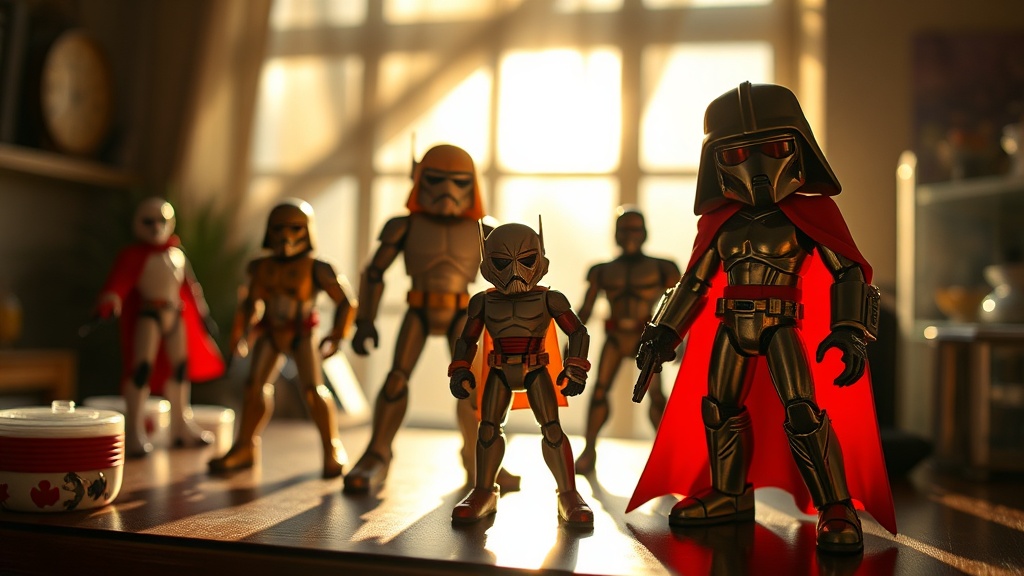
Protecting Your Vinyl Figures from UV Damage and Sunlight

Don't Assume Your Collection is Safe Just Because It's Indoors
Many collectors believe that as long as their figures aren't sitting on a sunny windowsill, they're safe from environmental damage. This is a mistake. Even indirect sunlight—that soft, diffused glow that fills a room—carries UV rays that can slowly degrade the vinyl and the cardboard packaging. We're talking about more than just a little fading; we're talking about the structural integrity of your collection. If you've ever noticed a bright pink Pop's color looking slightly dull or a white box turning a yellowish hue, you've already seen the effects of light damage. Understanding how to manage light exposure is one of the most important steps in long-term preservation.
The problem isn't just the sun itself, but the light spectrum. Ultraviolet light is a high-energy form of radiation that breaks down chemical bonds. In the world of collectibles, this means the pigments in the paint can break down (often called "fading") and the plastic can become brittle. It's a slow process, often invisible to the naked eye until the damage is permanent. Whether you're a casual collector or a high-end investor, ignoring the light source in your room is a gamble you'll eventually lose.
How Does UV Light Damage My Collection?
When we talk about UV damage, we're looking at two distinct issues: pigment degradation and material brittleness. First, there's the visual aspect. The vibrant colors that make your favorite characters pop—the deep blues, the bright reds, the neon greens—are susceptible to photo-oxidation. This process literally bleaches the color out of the vinyl. A figure that once looked brand new might end up looking washed out or "chalky" after a few years of exposure.
Second, there's the physical impact. Most Funko figures are made of PVC (polyvinyl chloride). While this material is durable, it isn't invincible. Constant exposure to high-energy light can cause the plastic to undergo a chemical change, making it less flexible and more prone to cracking or breaking. This isn't just about the figure inside the box; the cardboard boxes themselves are highly susceptible to this. A box that has become brittle can easily tear or crush when you try to handle it. To see more about the science of material degradation, you can check out resources like ScienceDirect, which offers deep dives into chemical properties of polymers.
Can I Use UV-Protective Cases for My Figures?
If you're looking for a physical barrier, display cases and acrylic protectors are your best friends. Using clear acrylic cases provides a layer of defense, but don't assume they are a total shield. Most standard acrylic cases do not block 100% of UV rays. However, they can help mitigate the speed at which light hits the surface. If you want to go a step further, look for cases specifically labeled as UV-resistant or those that feature built-in UV filters.
- Acrylic Protectors: Great for preventing dust and minor scratches, but check the UV rating.
- Glass Display Cabinets: Often more effective if the glass is tempered or treated with UV coatings.
- Custom Builds: Some collectors build custom-lit displays using LED strips that emit minimal heat and low UV radiation.
It's also worth noting that certain types of lighting, even indoors, can be problematic. Standard incandescent bulbs emit much more heat and a different spectrum than modern LEDs. If you're using older lighting setups, you might be cooking your collection without even knowing it. Transitioning to LED-only environments is a simple way to reduce the thermal and light-based stress on your vinyl.
What Are the Best Ways to Control Light in a Room?
You don't need to live in a dark cave to keep your collection safe, but you do need to be intentional about your room's layout. The most effective method is control at the source. This means managing how much natural light enters the room and how much artificial light is used. If you have a large collection, you shouldn't just put it in the living room where the sun hits the windows mid-afternoon. Instead, consider a dedicated room or a corner that stays consistently shaded.
Here are a few practical steps you can take right now:
- Window Treatments: Use blackout curtains or UV-blocking window film. This is a game-changer for rooms with large windows.
- Switch to LEDs: If you have a display shelf with built-in lighting, ensure those bulbs are LEDs. They produce far less heat and a much lower UV output than traditional bulbs.
- Rotation: While not a perfect solution, rotating your display can sometimes help distribute the wear, though it's better to just avoid light entirely.
- The "Dark Room" Method: Many serious collectors keep their most valuable pieces in airtight, light-proof containers when they aren't on display.
If you're interested in the technical aspects of light wavelengths and how they interact with surfaces, the NASA website often has incredible educational resources regarding solar radiation and light spectra that can give you a broader understanding of the physics at play.
A Quick Comparison of Lighting Types
| Light Source | UV Output | Heat Output | Recommended for Collectors? |
|---|---|---|---|
| Incandescent | High | High | No |
| Fluorescent | Moderate | Medium | Avoid if possible |
| LED | Very Low | Very Low | Yes |
| Natural Sunlight | Extreme | High | Avoid directly |
Ultimately, the goal is to create a stable environment. Fluctuations in light and temperature can lead to stress on the materials. A steady, controlled environment is the hallmark of a well-maintained collection. Don't wait until you notice a color shift to take action; by then, the damage is already done. Start by checking your current display setups and ensuring they aren't sitting in the path of a daily sunbeam.